Why Does the Same Drain Keep Clogging?
Why Does the Same Drain Keep Clogging?
You clear it. It works for a week. Then it’s slow again. Sound familiar? A drain that keeps clogging isn’t bad luck — it’s an unresolved underlying problem. Here are the real reasons this happens and what actually fixes each one.
Reason 1: The Clog Was Only Partially Cleared
The most common reason. A plunger or a short DIY snake punches a small hole through the blockage — enough for water to flow temporarily — but leaves most of the obstruction in place. Debris quickly builds up around the remaining clog and you’re back where you started.
The fix: a professional snaking with properly sized commercial equipment clears the full diameter of the pipe, not just a path through the middle. If you’ve “fixed” the same drain twice, it’s time to stop repeating the temporary fix. Drain Snaking Service in Newark, CA | Drain Snaking Newark
Reason 2: Grease Buildup Coating the Pipe
In kitchen lines, the culprit is often not a single object but years of grease, oil, and food residue coating the inside of the pipe. Each snaking punches through, but the narrowed, sticky pipe walls catch debris again within weeks.
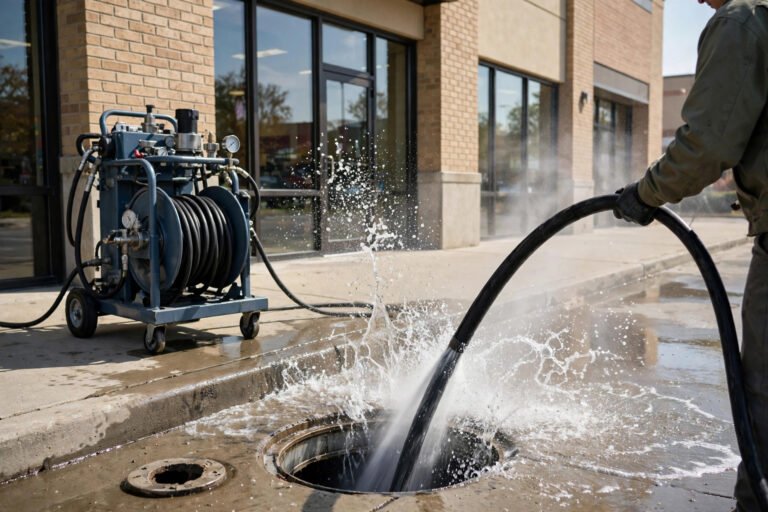
The fix: when buildup (not a discrete blockage) is the pattern, hydro jetting — high-pressure water that scours the full pipe interior — addresses the actual cause. A camera inspection can confirm whether buildup is your problem before you commit to anything. “Drain Snaking vs. Hydro Jetting: What’s the Difference?”
Reason 3: Tree Roots in the Sewer Line
If the recurring clog is in a main line or a drain connected to one, tree roots are a prime suspect — especially in neighborhoods with mature trees and older homes. Roots enter through tiny joints or cracks seeking moisture, then grow into a dense mass that catches everything flowing past. Snaking cuts the roots back, but they regrow, so the cycle repeats every several months to a year.
The fix: periodic root cutting manages the symptom; a camera inspection shows the extent of intrusion so you can make an informed long-term decision. This is particularly relevant in Newark’s older neighborhoods, where mature landscaping meets aging sewer laterals. Main Sewer Line Cleaning in Newark, CA | Drain Snaking Newark
Reason 4: A Sagging Pipe (Channel Belly)
Sometimes the pipe itself is the problem. A section of sewer line can sag over time due to soil settling, creating a low spot — a “belly” — where water and solids collect instead of flowing through. No amount of snaking fixes a belly permanently; debris simply re-accumulates in the dip.
The fix: only a camera inspection reveals a belly. Depending on severity, the options range from more frequent preventive cleaning to repairing the sagging section. Knowing the cause at least stops the cycle of paying for the same temporary clearing.
Reason 5: A Foreign Object Lodged in the Line
Kids’ toys, a dropped cap, “flushable” wipes that didn’t break down, or a mass of dental floss — objects lodged in a pipe create a permanent catch-point. Water flows around them for a while, then debris builds up and the drain slows again.
The fix: a camera inspection locates the object, and the right retrieval tool or targeted snaking removes it. This is one case where diagnosis really matters — blindly snaking past an object can push it deeper.
Reason 6: Scale and Mineral Buildup
In areas with hard water, mineral scale gradually narrows pipes from the inside. Cast-iron pipes can also develop internal corrosion and scaling with age. The result is a pipe with a fraction of its original capacity that clogs from normal, everyday use.
The fix: descaling (often via hydro jetting with the right nozzle) restores diameter. For severely deteriorated pipe, a professional can advise on longer-term options.
Reason 7: Improper DIY Attempts Making It Worse
Well-meaning DIY can contribute to the cycle: chemical cleaners that partially dissolve a clog and leave a hardened residue, drain snakes that compact a blockage tighter, or dislodged debris that reforms downstream. If your attempts keep failing, each one may be making the eventual professional job harder.
How to Break the Cycle
The pattern is clear: recurring clogs need diagnosis, not just another clearing. The right sequence is:
- Professional snaking with commercial equipment to fully clear the line.
- Camera inspection if the problem returns — to see roots, bellies, objects, or damage.
- Targeted solution based on what the camera shows — jetting for buildup, scheduled root maintenance, or repair for structural issues.
Guessing costs more in the long run than looking. A camera inspection is a modest investment that ends the cycle of repeat service calls.
A Simple Diagnostic Checklist
Before calling, run through this checklist — your answers help the technician diagnose faster:
- [ ] Which fixtures are affected? One fixture = local clog. Several = branch or main line.
- [ ] How often does it recur? Days = partial clearing or lodged object. Months = roots or buildup.
- [ ] What goes down this drain? Grease (kitchen), hair (bathroom), wipes (toilet) — be honest; it helps.
- [ ] How old is the plumbing? Older lines are more prone to roots, scale, and structural issues.
- [ ] Are there large trees near the sewer line’s path? If yes and it’s a main-line issue, roots move to the top of the suspect list.
- [ ] Has anyone used chemical cleaners recently? Tell the technician — it’s a safety issue for whoever works on the drain.
Bring these answers to the call and you’ll get a faster, more accurate assessment.
When “You Need a New Sewer Line” Is (and Isn’t) Legitimate
At some point in the recurring-clog journey, someone may suggest replacing the sewer line. Sometimes that’s legitimate — a collapsed pipe, severe root damage at multiple joints, or extensive deterioration genuinely can’t be maintained with cleaning alone. But it’s also one of the most expensive recommendations in plumbing, so it deserves scrutiny:
- Legitimate: a camera inspection shows collapse, major breaks, or severe channeling, and you’ve seen the footage yourself. Always ask to see the video.
- Questionable: the recommendation comes without any camera inspection, based only on the fact that clogs recur. Recurrence alone doesn’t prove the line needs replacement — it proves the cause hasn’t been diagnosed.
A trustworthy professional shows you evidence, explains the options (including continued maintenance as an alternative), and never pressures an on-the-spot decision for a multi-thousand-dollar job.
Get It Diagnosed Properly in Newark, CA
If the same drain keeps clogging in your Newark home, Drain Snaking Newark can clear it thoroughly and — when the pattern calls for it — run a camera inspection to find the real cause. Call (510) 555-0142, available 24/7, or request service online.